
İstanbul’da düzenlenen 3. Küresel İslami Ekonomi Zirvesi, sürdürülebilir kalkınma ve etik finansman konularını masaya yatırdı.
The 3rd Global Islamic Economy Summit, held at the Istanbul Financial Center under the auspices of the Turkish Presidency and organized by the AlBaraka Islamic Economy Forum, concluded after an intensive four-day agenda. Themed “Capital in Islamic Economics: Structuring Wealth for Sustainable Development,” the summit convened a diverse group of participants, including government officials, central bank governors, economists, investors, and academics, to discuss the future of the Islamic economy and its role in global finance.
During the event, a series of panels, workshops, and discussions focused on critical topics such as digital transformation, sustainable development, and the importance of ethical economic models. The summit highlighted the urgent need for an economic framework that prioritizes production, inclusivity, and sustainability in light of rising global inequalities and financial vulnerabilities.
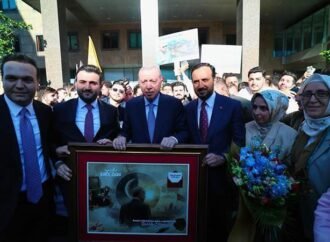
The summit attracted significant attention, particularly during its official opening ceremony, which was graced by Turkish President Recep Tayyip Erdoğan and other notable figures, including Abdullah Saleh Kamel, Chairman of the AlBaraka Islamic Economy Forum, and Sheikh Dr. Saleh bin Abdullah bin Humaid from Saudi Arabia. In his speech, President Erdoğan called for a more equitable global economic system rooted in moral values, emphasizing that prosperity cannot coexist with interest-based systems.
Abdullah Saleh Kamel further elaborated on the comprehensive nature of Islamic economics, asserting its role in promoting social justice and sustainable growth. Sheikh Dr. Saleh bin Abdullah bin Humaid added that economic development should be measured not only by financial metrics but also by ethical standards and social responsibility.
The summit served as a vital platform for interdisciplinary dialogue, uniting thought leaders from various sectors to explore new ideas and policy recommendations. Participants discussed the need to redefine capital, emphasizing its role beyond financial resources to include human capital, technology, and social impact.
A key takeaway was the recognition of Islamic finance’s potential for global growth, with discussions on how it can provide ethical investment opportunities not only for Muslim societies but also for broader economies seeking sustainability and inclusivity. The event also underscored the importance of digital transformation, with sessions dedicated to the impact of artificial intelligence and fintech on the future of Islamic finance.
The final day of the summit focused on the significance of supporting small and medium-sized enterprises (SMEs) and fostering entrepreneurial ecosystems. Participants agreed that Islamic finance could play a crucial role in enhancing productive capacity and facilitating access to finance for young entrepreneurs.
Throughout the summit, various agreements were signed, establishing new partnerships between academic institutions and financial organizations. The event culminated in a Gala Dinner at Dolmabahçe Palace, attended by global business leaders and government officials, reinforcing the international collaborations formed during the summit.
In closing, Yousef Hassan Khalawi, Secretary General of the AlBaraka Islamic Economy Forum, reflected on the summit’s achievements and announced that next year’s focus would shift to Islamic investment and banking. He expressed gratitude to the event’s partners and sponsors, highlighting the collaborative effort that made the summit a success.